Cape Town, South Africa

Cape Town, South Africa
Serving it up at Manenberg Primary!

Friday, January 20, 2017

All About Namibia

Happy inauguration day, everyone! Regardless of which candidate you voted for, I hope you have found peace and hope for the upcoming four years. Being outside of the US has definitely aided in that process, despite being frequently challenged and asked to defend American politics.

Also, a brief aside - my access to Wifi in Namibia is quite limited, which has made publishing blog posts quite difficult. Thanks for your patience, and hopefully better wifi is yet to come!

Namibia


Had you heard of Namibia before? I hadn’t heard of it prior to preparing my application for the Keegan Fellowship. This blog post is to establish some background information on Namibia, before we jump in on its school feeding program.


Namibia: The basics, and clarifying the misleading basics
Namibia is located on the coast of southwestern Africa, right above South Africa. Namibia gained its independence from South Africa in 1990, and had been a colony of South Africa since the end of WWII. The country has strong German, Dutch, and Afrikaans influence.


A Brief History
Namibia is home to at least 11 ethnic groups, with beautiful languages and cultures. The San, also called Bushmen, are the most famous cultural group in Namibia and are believed to be the oldest tribe in human history. The various ethnic groups traveled through and thrived in all terrains of Namibia.


Germany colonized Namibia (then called Deutsch Südwestafrika, or “German Southwest Africa”) in 1884 and maintained control until WWI. After Germany lost the war and its territories, the League of Nations “gave” Namibia to South Africa.  


During their time in Namibia, the Germans caused a lot of bloodshed; the Herero and Namaqua wars in the early 1900s wiped out 50-70 percent (24,000 to 65,000 people) of the Herero cultural group and 50 percent (10,000) of the Nama cultural group. In contrast, 150 German soldiers died.


The relationship between German South-West Africa and South Africa was … contentious. South Africa clung onto South-West Africa until war broke out in the late 1980s. The opposition party responsible for igniting the revolution, SWAPO, is still in power today. For a detailed look into the relationship between South Africa and Namibia, take a look here.


Despite being a large country, the population of Namibia is only 2.3 million citizens. The population density of Namibia is only 2.78 persons per square kilometer. In contrast, neighboring Angola has a population density of 20.07 persons per sq km, and the US is 20.35 persons per sq km. Most Namibians live in the northern part of Namibia, called the Caprivi Strip, or in the capital, Windhoek. A significant portion of Namibia’s geography is desert, which partly explains why the population is so concentrated in northern Namibia.


The Economics of Namibia
If you were to google “Namibia,” many websites would list Namibia as an “upper middle-income” African country. However it is important to clarify that while it is upper middle-income, wealth disparity is extreme in Namibia. In 2015, it had the highest GINI index in the world, meaning that its wealth polarization was higher than any other country. Wealth polarization is somewhat correlated with skin color; though White people take up only 6 percent of the population, they own almost 30 percent of all land in Namibia. This is likely reminiscent of Apartheid in Namibia when it was controlled by South Africa. Though locals have said that Namibia did not experience Apartheid as severely as South Africa, Namibian townships (the locations where Black people could legally live during Apartheid) carry disproportionate levels of poverty.

Image result for gini index

Currently, 27.6 percent of Namibians live in poverty, and 35 percent of Namibians live on less than $1 per day. Poverty tends to be more concentrated in rural areas, though major cities do have I’ll be writing about this later, but this wealth disparity creates an environment where Namibia’s school feeding programme can have a significant impact on breaking the inter-generational cycle of poverty.

Wednesday, January 4, 2017

School Lunch Political Cartoons

Hi everyone!

I occasionally make internet searches of the US's National School Lunch Program because I want to make sure that I don't miss any news that come out about school lunches. It's amazing how being abroad can skew one's access to news!

While I was doing the good ol' Google search "school lunches," I noticed a Google suggestion that I hadn't noticed before ... "school lunch political cartoons." Oh ho ho.

I love political cartoons. How had I not thought to search this earlier?! Here are a few of my favorites, as well as the accompanying blog posts that discuss similar issues portrayed in the cartoons.

[This cartoon was the most perplexing to me ... This cartoon was made in 2012, around the time when  modern nutritional standards were beginning to be established... if you understand what this picture is getting at, please comment below!]

[This one was tough to see, but sadly I can't disagree with it. While Michelle Obama's changes to school lunches have been wholly needed, I believe we are still missing the equilibrium of "healthy" and "realistic;" almost all children will prefer highly processed, fat and sugar-laden meals, the challenge is creating a school and home environment that make eating healthily mainstream.]


[No words necessary!]


[I LOVE this cartoon!!]


[Big Ag = Big Agriculture or Agribusiness]


Aren't these wonderful, yet equally disheartening? It is easy to be cynical about big business's role in governmental spending. But, given the immense amount of work that has been done on school meals in the last 8 years, there is definite hope for the welfare of this welfare program. 


Monday, January 2, 2017

Happy New Year!

Hi everyone! Happy New Year! I hope you had a very merry holiday season (“Frohe Weihnachten” - “Merry Christmas” in German). I have been here in Germany for the holidays, but have also been a bit all over the place over the last month.


The Christkind und ich!


I haven’t written a blog post in awhile, mainly because I’ve been exploring different parts of Europe, and that I haven’t had consistent wifi over the last week. (It’s amazing how reliant I have become on wifi!). Expect some blog posts in the near future, as I’ll be in a stable place in a few days! But to recap over the last few weeks...


I was in London for a few weeks, which was absolutely amazing. I visited a few schools, worked with a few different organizations that are tangentially related to school lunches, and guzzled liters of delicious tea. I’ll write about this in a future blog post, but the UK has been wonderful for my research experience - I believe it is the most similar to the US program out of all of the European programs I’ve studied. I met some amazing Vanderbilt alumni, got back into soccer, and really just enjoyed being. Just being.


My best friend, Emily, came to visit me less than two weeks before Christmas, and we spent the majority of our time in the Balkans. I’ll also be posting a short blog post about my time in the Balkans, as it has been my favorite region of all Europe to be in.  It’s a historically-rich and tumultuous place. Emily and I specifically went to Podgorica, Kotor and Budva in Montenegro; Skopje, Macedonia; and (on accident), Belgrade, Serbia.


Downtown Skopje, Macedonia

When I say, “on accident” … we really were not supposed to be in Belgrade! A word to the wise if anyone is considering traveling in the Balkans: if the bus website says there is an overnight bus online, don’t believe it until you have the ticket in your hand!

The bus website said that there was a bus going from Budva to Skopje. However, when we arrived to purchase our tickets, the receptionists shot us a “... really?” look and told us there was no bus until three days later. Woof. The only way out of Budva for the next few days was to go to Belgrade.


Image may contain: 2 people, people sitting, child and closeup
On a bus! I would wager that we spent about 5 hours flying on this trip, and 25 hours on bus rides.


I wasn’t too upset with going to Belgrade, though, it is my favorite European city! Once we made it down to Skopje, we were in the land of the statues. I kid you not, there are statues all over Skopje. We saw at least two hundred statues in our 2.5 day visit. While on a walking tour of the city, the tour guide said that the Macedonian government has “a very serious condition: copy/paste syndrome.” The mayor of Skopje and other governmental officials copied monuments (such as the Spanish Steps, bull statues from other European capitals, etc.) and pasted them in Skopje. It was both amusing and eery to see monuments “resurface” in Macedonia.


We flew back to London, Emily left, and I then went to Germany. I landed in Köln (Cologne) and visited the beautiful Christmas markets!


Image may contain: 2 people, people standing, sky and outdoor
The entrance to the Christmas Market!

Köln’s character is incredibly fun and funny. The tour guide said that the goal is get by in life while doing the least to do so! Call it laziness, call it being clever, but this concept manifests itself around the city! The government discovered ancient Roman ruins while installing a parking garage, and wanted to build a museum to highlight the ruins. Rather than build a building and move the ruins into the building, they just took away a few parking spaces in the parking garage and put on the “exhibit” there. Bahaha it was really fun listening to the Colognese culture - and have you heard of Carnival?


Next, I ended up in Straubing, Germany, a village in Bavaria. For those who do not know much about Bavaria, it was a separate country up until 1871. Even though it’s been merged with Germany for hundreds of years, it is incredibly patriotic to its Bavarian roots.

Bayrisches Familienfoto mit Dirndl & Lederhosen
Oktoberfest, dirndls, lederhosen, are all Bavarian!


Though I didn’t buy one, I did get the opportunity to try on a dirndl or two!


The Bavarian accent is also quite difficult to understand, which made for equally amusing and confusing conversations. I stayed with my American friend Monika, and her Bavarian boyfriend’s family in Straubing. It was so amazing. The food was delicious, Deutschmama and Deutschpapa (“German mom” and “German dad”) were so kind and fun to talk to, and being with loved ones during the holidays was really meaningful for me.


 Homemade Plaetzchen ("Christmas cookies")

"Downtown" Straubing


And then came the post-Christmas shopping. :) The temperature in Munich, Germany is pretty cold right now, about 20 F throughout the day. On January 3rd, I’ll be in Windhoek, Namibia, which is experiencing summer temperatures of 80+ F. I basically purchased a new wardrobe, which isn’t that many clothes to begin with! ;) A few shirts, a pair of pants, some new socks. Traveling light is helpful.


Tonight, I’m leaving Munich, where I’ve been at for the last few days, to go to Windhoek, Namibia. Everything about traveling to southern Africa feels like starting a new chapter. It’s a new year, a new continent, and I’m halfway done with my fellowship. It’s a bit strange, I feel like I’ve been gone from the United States for a really long time, but it also feels like things are moving more quickly. Though I still have half of my Fellowship to complete, I sense that the latter half will fly by.


Since I am halfway done, I want to take this time to thank you for following my blog. Even though I don’t know personally who is reading my blog, it is encouraging to know that you care about my journey. Traveling without a consistent community is difficult, so the small things - such as seeing that people are reading my posts - quite helpful for feeling like y’all are with me.


Gratefully,
Erin


I got to use a squatty potty for the first time!

Tuesday, December 6, 2016

The English Education System: Woof

Good afternoon from London, everyone! I hope you are staying warm. Even though temperatures are pretty chilly in London, it has been uncharacteristically sunny since I arrived. It hasn’t even rained since being here (fingers crossed for the rest of my time here!!)! Perhaps this is record-breaking? Or perhaps just climate change. Well, that turned down a dark path quickly…

Before talking about my school visit last week, I think it’s necessary to explain some key differences between the English and American schools systems, because they are quite different (by name). For the few weeks, I was utterly confused - public schools are private schools? What? You can be a junior at age 5? Hehe, I was pretty lost!

Here is a video that will help with understanding:


[Isn’t she clever? This video was really helpful … after watching it twice. Haha, these are puzzling differences!]

So, now that we have a basic understanding of schools in England, let’s add in another type of educational institution that was not mentioned: Academies.

The Academy: Further complicating the English education system
The academy is only found in England; Scotland, Northern Ireland, and Wales do not have academies. In fact, the United Kingdom’s school districts are pretty different on the whole.

The academy is an independent, state-funded school that is controlled by the central government (in contrast to a local authority, which has historically been more common). Academies are overseen by a charitable entity or private business, such as UBS. Academies first emerged in 2000 as a governmental attempt to revamp the worst-performing schools. It’s not clear what the logic is behind having a private business oversee the worst-performing schools. Perhaps it is based on the logic that the business mindset will improve the efficiency and effectiveness of a school. Or, perhaps it is similar to the charter school movement in America, which was founded on the idea of giving more autonomy and choice to educators and students.

A very important aspect of academies is that they can have different standards than traditional state schools. Or, more accurately, they are not obligated to follow the same standards. Oftentimes, academies do replicate the same standards as state schools - and the curricula mainly look the same. But as you will see with the academy I visited last week, the recent additions to nutrition guidelines do not apply to academies. Academies do not have the same restrictions and standards for school dinners. Does this mean that academies are serving their children french fries, donuts, and burgers all day long? You’ll soon see! ;)


[Without the obligation to follow the Department of Education’s nutritional guidelines, does this mean Jamie Oliver’s arch nemesis, the Turkey Twizzler, could appear in academies?!]

Academies grew in popularity, with a peak in 2010. At its peak, both failing and successful schools were being transformed into academies. Today, academies account for 62% of secondary schools and 15% of primary schools. Regardless of how successful academies are, it is significant to recognize how much money and resources were used to transform nearly 4,500 schools over a ten-year period. While a school’s transformation may not seem to cost much, the Department of Education gave schools £25,000 for transition costs. This was a massive shift in the educational system - but the question everyone wants to know is, do academies work?

The answer to this question has important implications for the future of England’s education system. The government, up until October (not trying to spoil anything), mandated that all state schools must be “academised” by 2022. Depending on how achievement results change, this requirement may or may not be voided.

The effectiveness of academies … it depends on who you ask.
Some people love academies, some don’t. Similar to American charter schools, some academies have greatly improved the educational outcomes of children who had attended failing schools. Some academies have shown lower levels of achievement (as compared to its achievement when it was governed by a local authority) and even corruption (yikes). On the whole, Ofsted (Office for Standards in Education, Children’s Services and Skills) has found that achievement results do not indicate a significant difference in educational achievement.

In October 2016, the Education Bill was revised to omit the conversion requirement. Though they still “encourage” schools to become academies, this message was taken as evidence that academies were not succeeding like the government had expected. Richard Watts, chairman of the LGA’s Children and Young People Board, said, there was “evidence that council-maintained schools perform more highly than academies and free schools in Ofsted inspection.”

Wait, Erin, aren’t you studying school dinners?
Yes, which is why I need to wrap this up! The rise of academies definitely matters in relation to my research project, so I want to make sure that the distinctions in the education system are understood first :) Ok, I am off to go on a walking tour to see London’s street art - see you all later!


[Street art from Camden, a borough of London]

Saturday, December 3, 2016

Futbol, fear, and ... papyrus?

Hey everyone!

People have always said that London is a bustling, busy city, and I have definitely adopted that mantra over the last few weeks. I was looking through the pictures I've taken over the last few weeks, and realized that there aren't that many of them ... whoops :)


I visited my first school (or should I say, academy - yes, a post on the British educational system is necessary) yesterday, which was a blast. I had my coffee in hand (funky unicorn mug and everything), so I was ready to go! Do I look like a teacher?


[Taken at 6:53 AM]

But before I make those posts, I wanted to write a post that has little to do with school dinners. This post will talk about Futbol, fear, and papyrus - yes, it's been a busy time to say the least. 


Futbol and Fear

Several of the questions I received while interviewing for the Keegan Fellowship had nothing to do with my research. And no, I am not referring to the, "Tell us about yourself" kind of questions :) Rather, the questions gauged my willingness to experience new things, as well as my curiosity/exploratory nature. I believe the selection committee was looking for someone who would enjoy putting themselves out there. I definitely was not the only applicant to exhibit this - but I can definitively say, I have faced a fear that I thought I would never overcome. Talk about putting myself out there!

Long story short, I had a serious soccer incident in 2009 that ended my soccer career, changed my life trajectory, and instilled in me a significant fear of contact sports. I was a pretty good soccer player, and was seriously considering playing the sport in college. After having knee surgery and physical therapy, I was never able to get back onto the field; whenever people would run at me (regardless of where this was, i.e. on a soccer field, in the school hallway), I instinctively recoiled. I had convinced myself that I would never try soccer again.

Oh ho ho. Last Wednesday, I played soccer for the first time in seven years. Another Vandy alum asked if I could join their intramural team, and my mind immediately screamed, "NO." But for reasons I don't understand, I could hear myself saying out loud, "Sure, I'd love to play." What just happened?! Talk about an out of body experience!

No, I was no longer a skilled player - I made some poor passes, I didn't score any goals. At least I didn't have any own goals! What I did have, though, was this ethereal high at the end of the game: I had faced my fear and played soccer. My knee actually did quite well, despite the cold weather and lack of soccer cleats. 

Though I will not be the next Mia Hamm, perhaps I'll play intramurals back in the US. But that's not the important thing to me. I just love that I can.

Papyrus?

This will have to be a quick story because I've got to run! Another thing that I've never tried before is Toastmasters. Toastmasters is a non-profit that helps people become better public speakers and communicators, which I think everyone can benefit from. My Vandy friend took me to the meeting that she went to (at 7 am ... their chapter is called the Toastmasters Early Birds for a reason), and I figured I would sit in the audience and watch as people spoke eloquent speeches! 

Haha. Nope!

There is a section of Toastmasters where people are given random topics to build a 30-60 second impromptu speech off of. Half asleep from being so tired, I was surprised to hear my name called, followed by the word, "papyrus."

Haha, what?! 

Well, I gave a 47 second speech on papyrus, and won the award for the impromptu speeches! Wooo!


[I'm smiling like that to hide the bags under my eyes hehe]


Coming up soon is a post about my first visit to a UK school - get excited! Thanks for reading through this blogpost, I appreciate your support so much. 

Erin


Friday, November 25, 2016

The Raven Master ... and Beef Eaters? United Kingdom

Happy Thanksgiving, all! And I suppose, Happy Black Friday? Even though the UK doesn’t celebrate Thanksgiving, Black Friday has managed to infiltrate its calendar.

[My best friend's aunt lives in London, and we had a hearty Thanksgiving feast!]


I have been pleasantly overwhelmed by the largeness and beauty of London. It is a gorgeous city with seemingly endless traditions (Ever heard why there is a Raven Master - or Beef eaters - in the Tower of London?), historical gems, and amazing architecture.

[The Natural History Museum - filled with many fossils, geological specimens, and third grade classes.]

[Pretty regal Stock Exchange, eh?]

With Twinings tea in hand and a tissue box nearby (I am happily getting over a cold), I am diving into The UK’s, or more appropriately, England’s school dinners.

A short - yet long - history of England’s school lunch program

England has had the longest running school lunch program in Europe, becoming statutory law in the 1940s. However, school meals date back to 1879, where some primary schools in Manchester served free meals to poor children.  


The British school lunch program, like the United State’s program, did not emerge from the ethical need to feed children in poverty. While the American program served as an economic stimulus for farmers (check it out in my earlier post here), the British program was created to produce stronger soldiers. Generally, there were significant disparities in health and wellness in England in the 19th century; public infrastructure such as roads, clean water facilities, and access to nutritious foods was wholly inadequate. In 1901, Seebohm Rowntree's survey of working class families in York found that “almost half of the wage-earning population of the city could not afford enough food to keep them 'physically efficient.”'

[Hungry lil' ones in the UK; picture from The National Archives: School Dinners]

As England suited up to fight in the 1899 Boer Wars, the military realized that one-third of all young men were too small or undernourished to serve. Yikes.

[Can you imagine this guy carrying a rifle?]

To solve this military-sized problem, the 1921 Education Act set up the frame for a  lunch program and set the eligibility standards for free meals. The government significantly limited the impact of this program, though. Spending limits were set to offset the costs of labor strikes that increased the cost of school lunches, so not all malnourished children received a meal. In 1936, 2.7 percent of school children got free meals.

World War II
While schools lunches only reached 2.7 percent of children in 1936, the Second World War catapulted the program into national importance. With the Boer Wars fiasco in the backdrop, school meals were viewed as fundamental to the health of England’s children, and by extension, future military. School meals became statutory law in the 1944 Education Act (prior to 1944, school meals were allowed but not required) and funding was increased. By 1945, one-third of the entire school population was fed (and 14 percent of meals were free).  

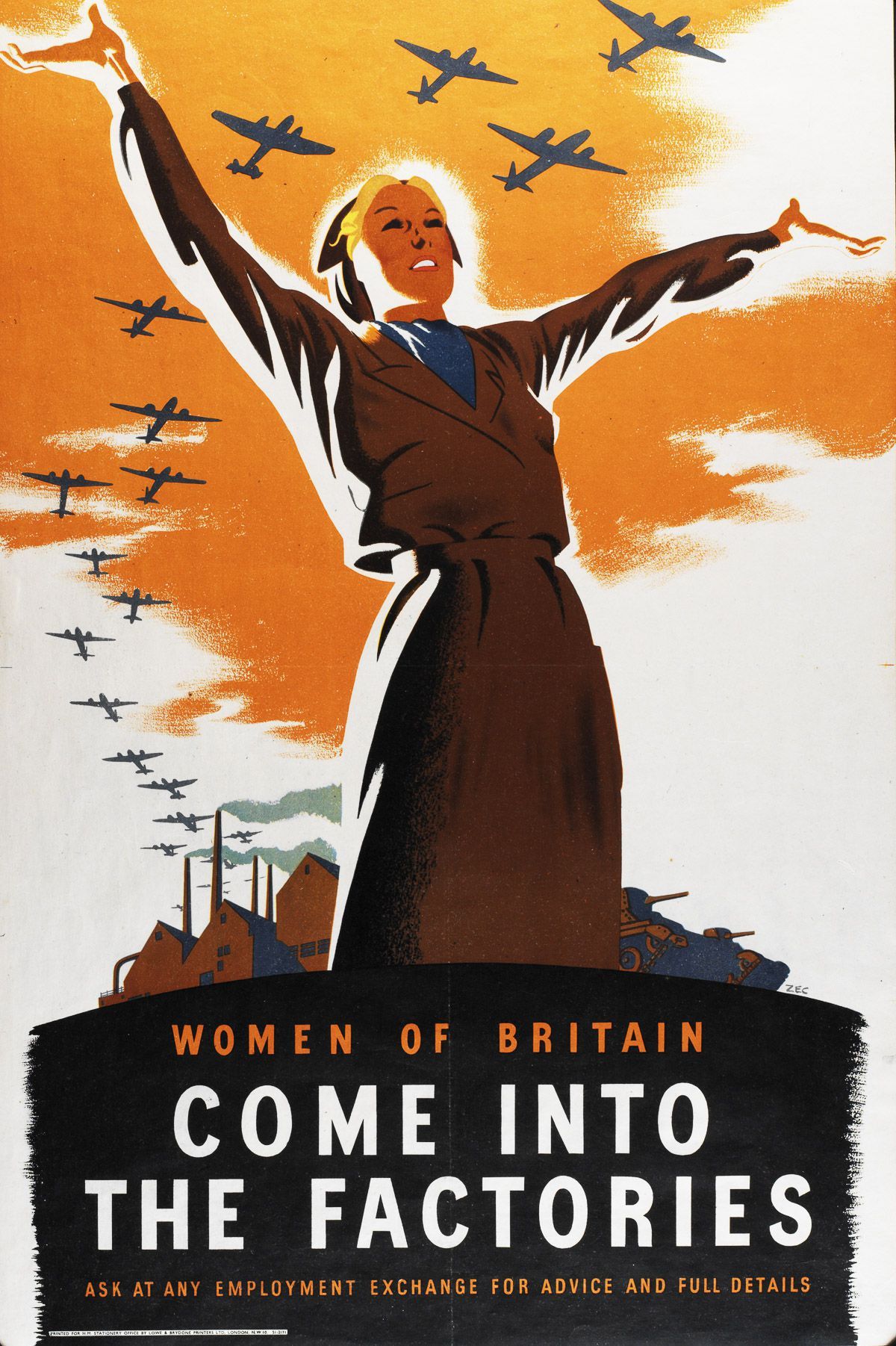
[In addition to "fortifying" their children, another reason for increased access is that women were entering the workforce. Since women were not home to cook, school lunches filled this gap while women filled factories.]


Entering the modern era of school lunches: The rollbacks to the school lunch programs
The school lunch program stayed largely the same until Margaret Thatcher and the Conservative Party came into power. Margaret Thatcher was elected Prime Minister of the United Kingdom in 1979, also elected on the premise that she would cut taxes and decrease government spending. What was the first program to be slashed? The school lunch program and the school milk subsidy, which had provided free milk to all children. Thatcher was labeled as “Thatcher Thatcher, Milk Snatcher!” for her steep cuts in public spending.

The biggest thing impact on the NSLP during the Thatcher administration was the Education Act of 1980, which withdrew the minimum nutrition requirement. This, coupled with hiring private tenders to provide the food, allowed competitive private companies swoop in and sell low-quality, fast food to children. Since there were no nutrition standards, the companies had no impetus to sell wholesome, quality foods.

I cannot explain how impactful this was. Even though there was food rationing in 1950 due to insufficient funding (Hello, WWII!), children in 1950 had healthier diets than children in the 1990s. School lunches were loaded with sugars, salt, and fat while stripping the food of fruits, vegetables, and nutrients necessary for child development.  

The nutritional deficiency of school lunches could not have come at a worse time, either! During the 1980s and 90s, technology (TV, computers) became incredibly mainstream, and children became more sedentary. Furthermore, the introduction of the microwave and freezer also led to less home-cooked meals - and more fast food.

Study after study in the 1990s and early 2000s found that children were not getting enough healthy foods in their diets. Obesity doubled from 1980 to 2000. That’s really bad.

Jamie Oliver to save the day!
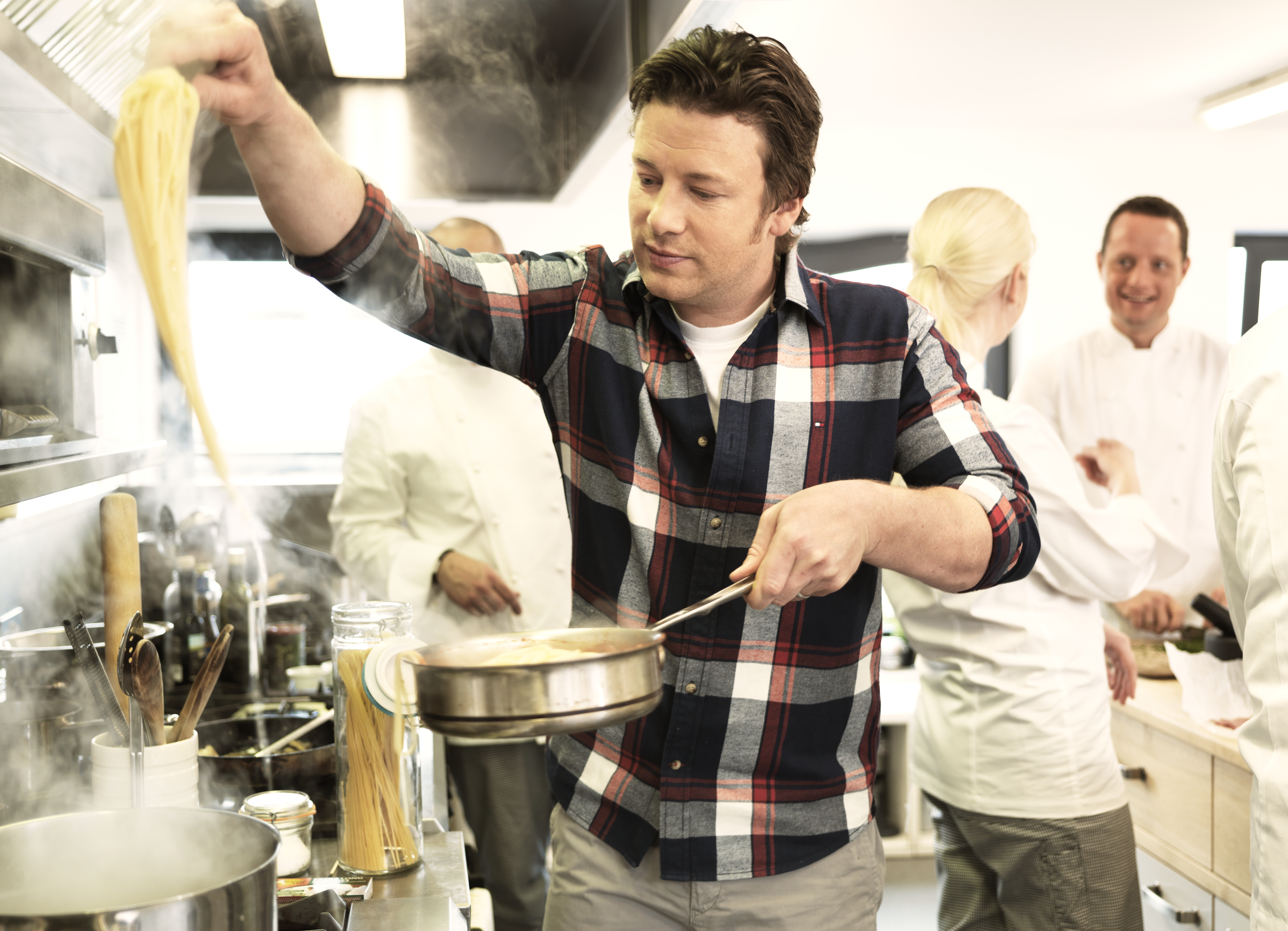
Jamie Oliver … I think he should be knighted for his important efforts to fix school meals. As I mentioned in my earlier post, Jamie started calling for healthier school meals in the early 2000s. Though it took a TV show, rallying public support, gathering petitions, Jamie succeeded in prompting government action.


And without giving too much away on the contemporary status of the school lunch program (I will talk about that for the next few weeks), school lunches have vastly improved since the 1990s. But where are they now? Stay tuned, that’s coming soon!

[Every day, an artist comes out to create a sand "sculpture!"]

[The Christmas holiday season is underway in London!!]


Monday, November 21, 2016

A political post: What Trump could mean for the National School Lunch Program

I know, I heard your audible groan, “another post about the presidential election?” If you’re like me, I was incredibly invested in the presidential election - gobbling up political podcasts, watching the polls, watching the Hillary Shimmy on repeat. After seeing the results, I was extremely distressed and apathetic towards anything politics-related. However, channeling my inner-Elizabeth Warren, I am begrudgingly ready to move forward and give president-elect Trump a chance to advocate for the people.

Given the election news, I’ve decided to do a post on the National School Lunch Program and Trump.


“Trumped Up Trickle Down Economics” - Trump and the NSLP

Trump did not specifically reference the NSLP on the campaign trail, but several of his comments on other policies directly relate and should cause worry.

1. First, as a major proponent for deregulation, Trump has proposed rolling back safety regulations at the FDA. Trump specifically mentioned removing the FDA Food Police, which monitors food production, safety, quality, and transportation. Deregulating the FDA could greatly impact the food standards of the NSLP, specifically those achieved by the Michelle Obama administration. Lowering food standards opens cafeterias to more processed foods, soft drinks, and lower quality produce.

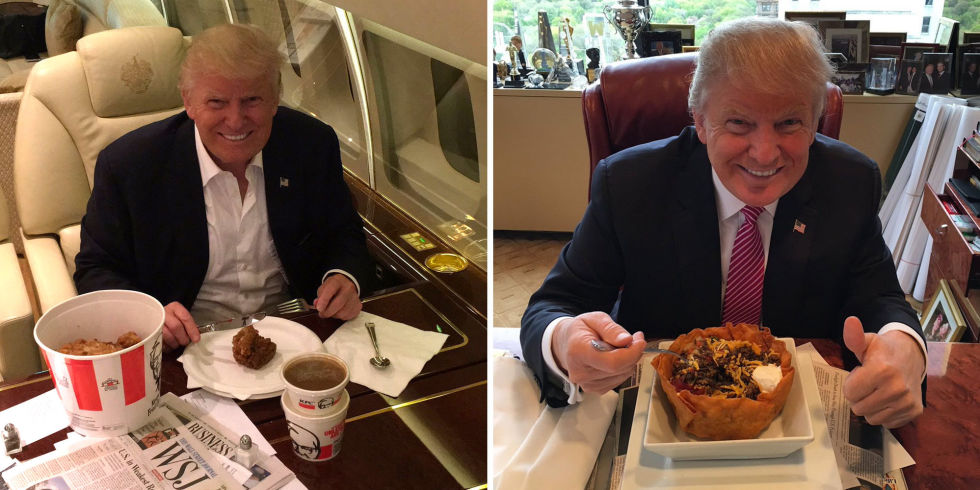
Donald Trump is a huge fan of fast food. Why? He believes it has the highest food safety standards.

2. Lowering taxes for the wealthy was one of the major selling points for the Trump campaign. Though Trump never said where he would make up the money lost from decreased tax revenues, there is a historical example of this same action that led to the gutting of the British School Lunch Program.


Margaret Thatcher was elected Prime Minister of the United Kingdom in 1979, also elected on the premise that she would cut taxes and decrease government spending (Her party, the Conservative Party, holds similar ideological premises as the Republican party does today). What was the first program to be slashed? The school lunch program and the school milk subsidy, which had provided free milk to all children. Thatcher was labeled as “Thatcher Thatcher, Milk Snatcher!” for her steep cuts in public spending. While in office, she also abolished the minimum nutrition standards (sound like someone I just mentioned above?), allowing competitive private companies swoop in and sell low-quality, fast food to children.

While this may not happen in Trump’s presidency, it isn’t impossible nor unlikely. Especially since this happened in the UK - the European country with the most similar disparities in wealth and levels of childhood obesity - my fingers are crossed this won’t happen in the United States.

3. A Republican-led government will likely result in many social services and social welfare programs being drawn back. This is no surprise, as the conservative ideology calls for smaller government. In 2017, Congress will review and amend the Child Nutrition Reauthorization, which obviously relates to the NSLP. Republicans have already highlighted parts of the NSLP they want to roll back: Smart Snacks, the ban on certain foods, etc. They have also proposed a three-state block grant pilot, which is a complicated term that refers to funding. Simply, the federal government will decrease its investments in the NSLP.

Just reelected as Speaker of the House, we'll see what Paul Ryan and the Republicans have in store for us.

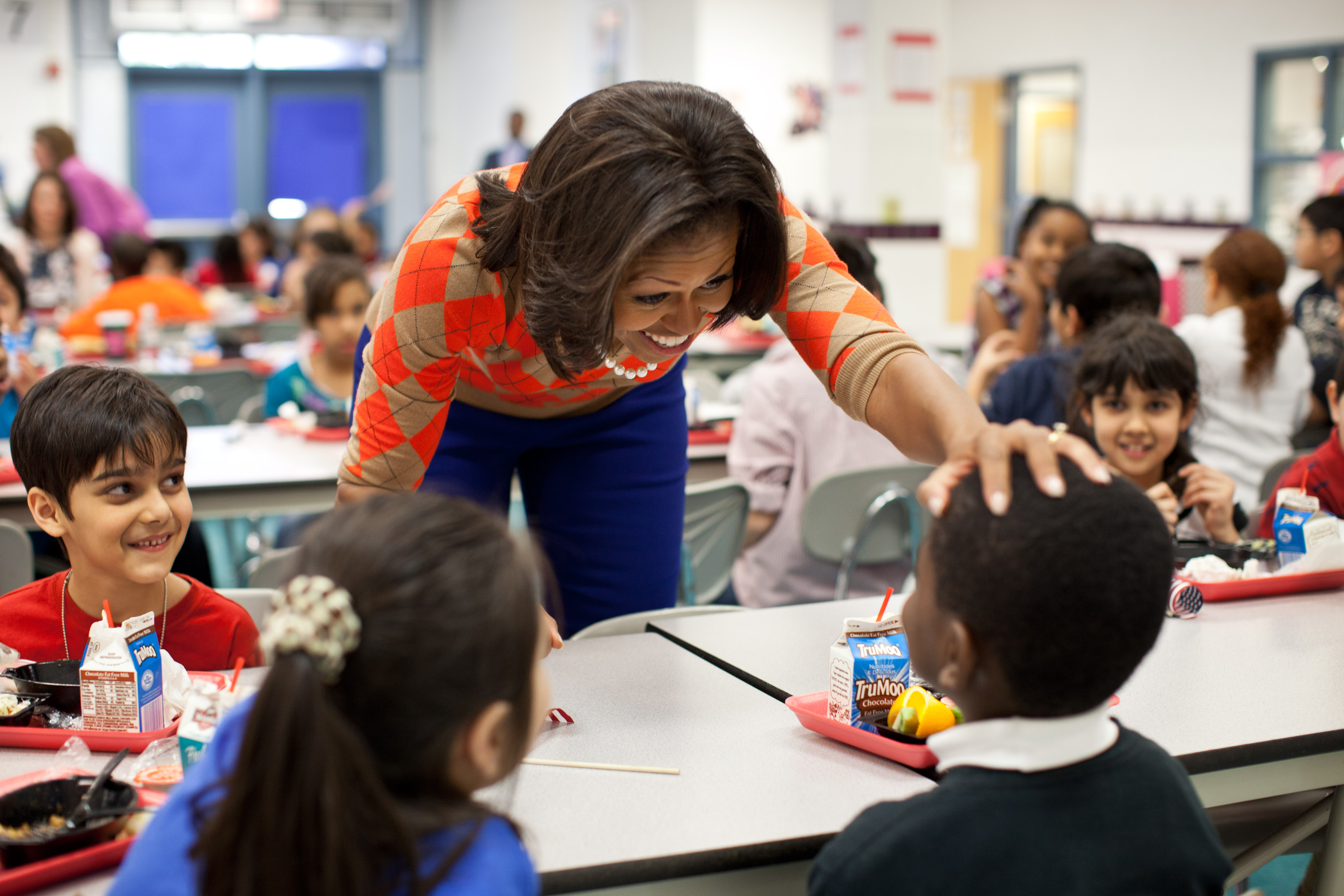
So, is the NSLP at risk for cuts in funding, and possibly for lower nutrition standards? Yes. Am I worried? No. I have such confidence and faith in Michelle Obama’s skills in protecting her efforts that have positively impacted millions of children.